IriSight® Case Study
Overview
Patient:
19 year-old primagravida, 22 weeks gestation
Clinical presentation:
Hydrops (ascites, pleural effusion), polyhydramnios, thickened placenta, cardiomegaly
Testing strategy:
Variantyx whole genome testing
Key finding:
Likely pathogenic, maternally inherited c.816+1G>C variant in the ENG gene
Clinical outcome:
Diagnosis established with implications for maternal medical management and pregnancy-related complications
Why IriSight® was the right choice
An anatomy scan at 22 weeks identified non-immune hydrops fetalis with associated polyhydramnios and placentomegaly, and cardiomegaly. Prognosis and recurrence risk of hydrops depends upon the underlying etiology.
IriSight® was selected as the initial test because it delivers the most comprehensive genomic insights from the start:
- Reducing time to diagnosis
- Avoiding unnecessary testing
- Supporting the highest standard of patient care
Diagnostic finding: Hereditary hemorrhagic telangiectasia type 1
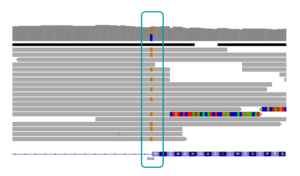
Variantyx IriSight® testing identified a heterozygous, maternally inherited, likely pathogenic c.816+1G>C variant in the ENG gene. This canonical splicing variant is expected to result in loss of protein function.
Autosomal dominant hereditary hemorrhagic telangiectasia (HHT) type 1 is characterized by considerable variability in symptoms and age of onset, including prenatal onset.
Impact on clinical care
In addition to providing information relevant to fetal prognosis and clinical management, testing enabled maternal screening for pulmonary and cerebral arteriovenous malformations (AVMs) – standard practice for women with HHT who are considering pregnancy or are already pregnant.
Spotlight on comprehensive testing
Challenges
Most prenatal testing limits reporting to variants associated with disorders having a significant phenotypic overlap with the observed ultrasound findings. This approach risks missed reporting of clinically relevant variants, as many underlying genetic conditions present without observable prenatal symptoms.
Why IriSight®
- Goes beyond the available phenotypic information to identify pathogenic and likely pathogenic variants associated with early-onset genetic disorders, overcoming the limitations imposed by prenatal clinical presentation and phenotypic heterogeneity
Additional similar cases

IriSight® – Deep intronic SNRPB variant explains micrognathia, retrognathia & polyhydramnios
IriSight® – Elective testing identifies homoplasmic mitochondrial variant inherited from heteroplasmic mother
IriSight® – MED12 SNV links observed congenital diaphragmatic hernia to Hardikar syndrome diagnosis