
Genomic Unity® Case Study
Overview
Patient:
5-year-old female
Clinical presentation:
Global developmental delay, seizures, hypotonia, hyperammonemia, hydronephrosis, respiratory failure, short stature, decreasing body weight, patent foramen ovale, atrial septal defect, recurrent urinary tract infections, anemia
Testing strategy:
Variantyx whole genome testing
Key finding:
Homozygous, likely pathogenic CPS1 variant
Clinical outcome:
Diagnosis established and tailored medical management enabled
Why Genomic Unity® was the right choice
With a history of NICU admission for seizures, severe lethargy and hypotonia, plus a history of recurrent hyperammonemia leading to a liver transplant, a primary mitochondrial encephalopathy was suspected.
Genomic Unity® was selected as the initial test because it delivers the most comprehensive genomic insight, including both nuclear and mitochondrial genome analysis from the start, while:
- Reducing time to diagnosis
- Avoiding unnecessary testing
- Supporting the highest standard of patient care
Diagnostic finding: CPS deficiency
Variantyx Genomic Unity® testing identified a homozygous, pathogenic c.3457G>T variant in the CPS1 gene. The variant introduces a premature stop codon and is expected to result in loss of protein function.
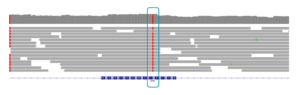
Uniform data from WGS clearly shows the nuclear variant which is associated with carbamoylphosphate synthetase I (CPS) deficiency. Combining nuclear and mitochondrial genome analysis enables detection of the causative CPS1 variant, which would be missed by testing focused solely on the mitochondrial genome.
Impact on clinical care
In addition to establishing a diagnosis of CPS deficiency, identification of the causative variant informs tailored medical management options such as dietary protein restriction and nitrogen scavenger medication.
Variant spotlight: Nuclear-encoded mitochondrial disorder variants
Diagnostic challenges
Mitochondrial disorders are a clinically heterogeneous group of conditions caused by dysfunction of both mitochondrial and nuclear genes. To complicate matters, clinical features of common neurological and metabolic diseases can mimic mitochondrial disorders. When a mitochondrial disorder is suspected, testing that focuses only on the mitochondrial genome leads to critical diagnostic gaps.
Why Genomic Unity®
- Sequences and analyzes both the nuclear and mitochondrial genome, resolving diagnostic ambiguity.
- Broad nuclear gene coverage helps avoid missed diagnoses of nuclear-encoded mitochondrial and mitochondrial mimetic disorders.
Additional similar cases

Genomic Unity® – MT-ATP6 variant explains progressively worsening ataxia
Genomic Unity® – Heteroplasmic mitochondrial deletion explains multiorgan dysfunction
Variantyx tests that would have identified this variant
Genomic Unity® 2.0 | Genomic Unity® Whole Genome Analysis | Genomic Unity® Lightning Genome Analysis | Genomic Unity® Lightning 2.0 Genome Analysis – NICU | Genomic Unity® Lightning 2.0 Genome Analysis – Standard | Genomic Unity® Exome Plus Analysis | Genomic Unity® Exome Analysis | Genomic Unity® Comprehensive Mitochondrial Disorders Analysis | Genomic Unity® Nuclear Encoded Mitochondrial Gene Analysis
