Genomic Unity® Case Study
Overview
Patient:
Male in his mid 60’s
Clinical presentation:
Progressive ataxia, gait imbalance, spastic hemiplegia, dysarthria, restless legs, easily fatigued, bilateral upgoing toes, hyperreflexia, absent ankle jerks, urinary urgency, slurred speech, weak voice, lower back pain, muscle spasm, cramping in his calves, tingling in his arms
Testing strategy:
Variantyx whole genome testing
Key finding:
Pathogenic homoplasmic variant in the MT-ATP6 gene
Clinical outcome:
Diagnosis established
Why Genomic Unity® was the right choice
Presenting with progressively worsening symptoms and a maternal family history of ataxia, targeted movement disorders testing with the option to reflex up to comprehensive testing was recommended.
Genomic Unity® was selected as the initial test because it delivers the most comprehensive genomic insight, including both nuclear and mitochondrial genome analysis from the start, while:
- Reducing time to diagnosis
- Avoiding unnecessary testing
- Supporting the highest standard of patient care
Diagnostic finding: NARP syndrome
Variantyx Genomic Unity® testing identified a homoplasmic, likely pathogenic variant in the MT-ATP6 gene.
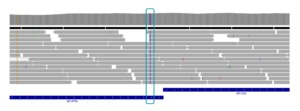
Uniform data from WGS clearly shows the mitochondrial variant which has been associated with multiple disorders including neuropathy, ataxia, and retinitis pigmentosa (NARP) syndrome. Mitochondrial genome analysis enables detection of the causative MT-ATP6 variant, often absent from standard movement disorder panels, reducing the risk of a missed diagnosis.
Impact on clinical care
Established a definitive diagnosis.
Variant spotlight: Mitochondrial variants
Detection challenges
Exome and panel tests typically focus on variants in nuclear genes only, ignoring the mitochondrial genome – requiring separate testing for coverage of mitochondrial genes. This leads to critical testing gaps, particularly in patients with symptoms suggestive of movement disorders for which there is growing evidence of a connection with mitochondrial disease 1,2,3.
1. Ticci, C et al. J Clin Med. 2021 10(10):2063. 2. Montano, V et al. J Neurol. 2022 269(3):1413-1421. 3. Srinivasan, SR et al. Ann Clin Transl Neurol. 2025 12(12):2398-2409.
Why Genomic Unity®
- Sequences and analyzes both the nuclear and mitochondrial genome, eliminating mitochondrial coverage gaps.
- Provides targeted testing options focused on pre-curated sets of indication-relevant genes with the option to automatically reflex to comprehensive analysis in the case of a non-diagnostic result.
Additional similar cases

Genomic Unity® – Heteroplasmic mitochondrial deletion explains multiorgan dysfunction

IriSight® – Elective testing identifies homoplasmic mitochondrial variant inherited from heteroplasmic mother
Variantyx tests that would have identified this variant
Genomic Unity® 2.0 | Genomic Unity® Whole Genome Analysis | Genomic Unity® Lightning Genome Analysis | Genomic Unity® Lightning 2.0 Genome Analysis – NICU | Genomic Unity® Lightning 2.0 Genome Analysis – Standard | Genomic Unity® Exome Analysis | Genomic Unity® Mitochondrial Genome Analysis | Genomic Unity® Comprehensive Mitochondrial Disorders Analysis | Genomic Unity® Movement Disorders Analysis | Genomic Unity® Retinal Disorders Analysis | Genomic Unity® Hearing Loss Disorders Analysis