Genomic Unity® Case Study
Overview
Patient:
4-year-old female
Clinical presentation:
Generalized muscle weakness, wide-based waddling gait, progressive ankle contractures, acquired equinovarus deformity, tires easily
Testing strategy:
Variantyx whole genome testing
Key finding:
Likely pathogenic, single exon deletion in the GCH1 gene
Clinical outcome:
Dopa-responsive diagnosis established
Why Genomic Unity® was the right choice
Muscle weakness initially suggested a neuromuscular disorder, which had been the focus of prior panel testing. However, with passing time, the differential diagnosis had expanded to now include neurodegenerative disorders, given the worsening ankle contractures and gait abnormalities, and mitochondrial disorders, due to fatigue and other symptoms. With no apparent family history, the patient’s parents were seeking insight into possible future health concerns for her as well as the likelihood of future pregnancies or children being similarly affected.
Genomic Unity® was selected over exome as a comprehensive test because it delivers the most comprehensive genomic insight from the start while:
- Reducing time to diagnosis
- Avoiding unnecessary testing
- Supporting the highest standard of patient care
Diagnostic finding: Dopa-responsive dystonia
Variantyx Genomic Unity® testing identified a heterozygous, paternally inherited, likely pathogenic deletion in the GCH1 gene.
With an approximate size of 4.42-5.21 kb, this deletion encompasses exon 1 and is expected to result in loss of protein function.
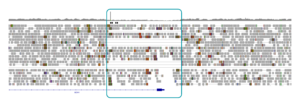
Uniform data from WGS clearly identifies the heterozygous deletion.
Impact on clinical care
Provided a definitive diagnosis, opening the door to potential treatment opportunities and informing risk of recurrence.
Variant spotlight: Single exon deletions
Detection challenges
Single exon deletions are below the limit of detection of most genetic tests – including exome and panel tests. Especially when one or both breakpoints fall within an intronic or intragenic region. This leads to missed variant calls.
Why Genomic Unity®
- Has a detection range from 1 bp to whole chromosomal events, easily detecting single exon deletions.
- Sequences all intronic and intergenic regions, enabling breakpoint detection regardless of location.
Additional similar cases

Genomic Unity® – Single exon PEX1 deletion confirms suspected Zellweger spectrum disorder diagnosis
Genomic Unity® – Single exon deletion explains epilepsy and developmental delay
Genomic Unity® – Single exon deletion explains intellectual disability

IriSight® – Single exon deletion explains multiple congenital anomalies
IriSight® – Single exon DOK7 deletion explains arthrogryposis multiplex congenita
Variantyx tests that would have identified this variant
Genomic Unity® 2.0 | Genomic Unity® Lightning 2.0 Genome Analysis – NICU | Genomic Unity® Lightning 2.0 Genome Analysis – Standard | Genomic Unity® Lightning Genome Analysis | Genomic Unity® Whole Genome Analysis | Genomic Unity® Exome Plus Analysis | Genomic Unity® Exome Analysis | Genomic Unity® Constitutional Genome-Wide Copy Number Variant Analysis | Genomic Unity® Genome-Wide CNV and FMR1 Analysis | Genomic Unity® Movement Disorders Analysis | Genomic Unity® Epilepsy Analysis