Understanding Variantyx Reports

Variantyx diagnostic reports for rare disorders, reproductive genetics, hereditary cancer and other tests detail the genetic findings that fall within the parameters of the ordered test and correlate with the patient’s clinical presentation.
Learn about key sections by scrolling through the sample report below.
Test Performed
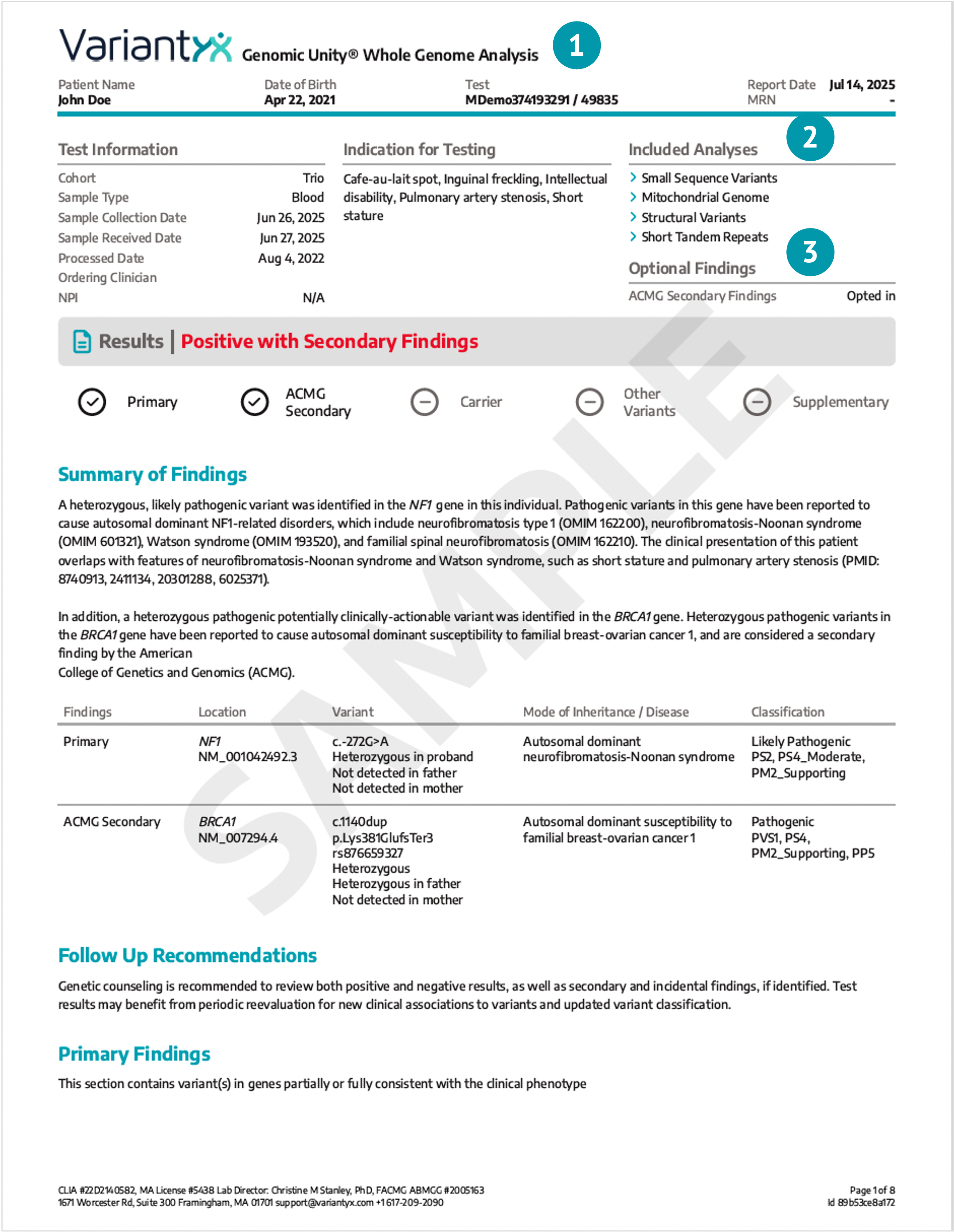
Included Analyses
Lists included analyses by variant type, as determined by the test ordered. Possible analyses include small sequence variants, mitochondrial genome, structural variants, short tandem repeats and maternal cell contamination (for IriSight® tests only).
Optional Findings
Opt in/out status is noted for additional findings as ordered.
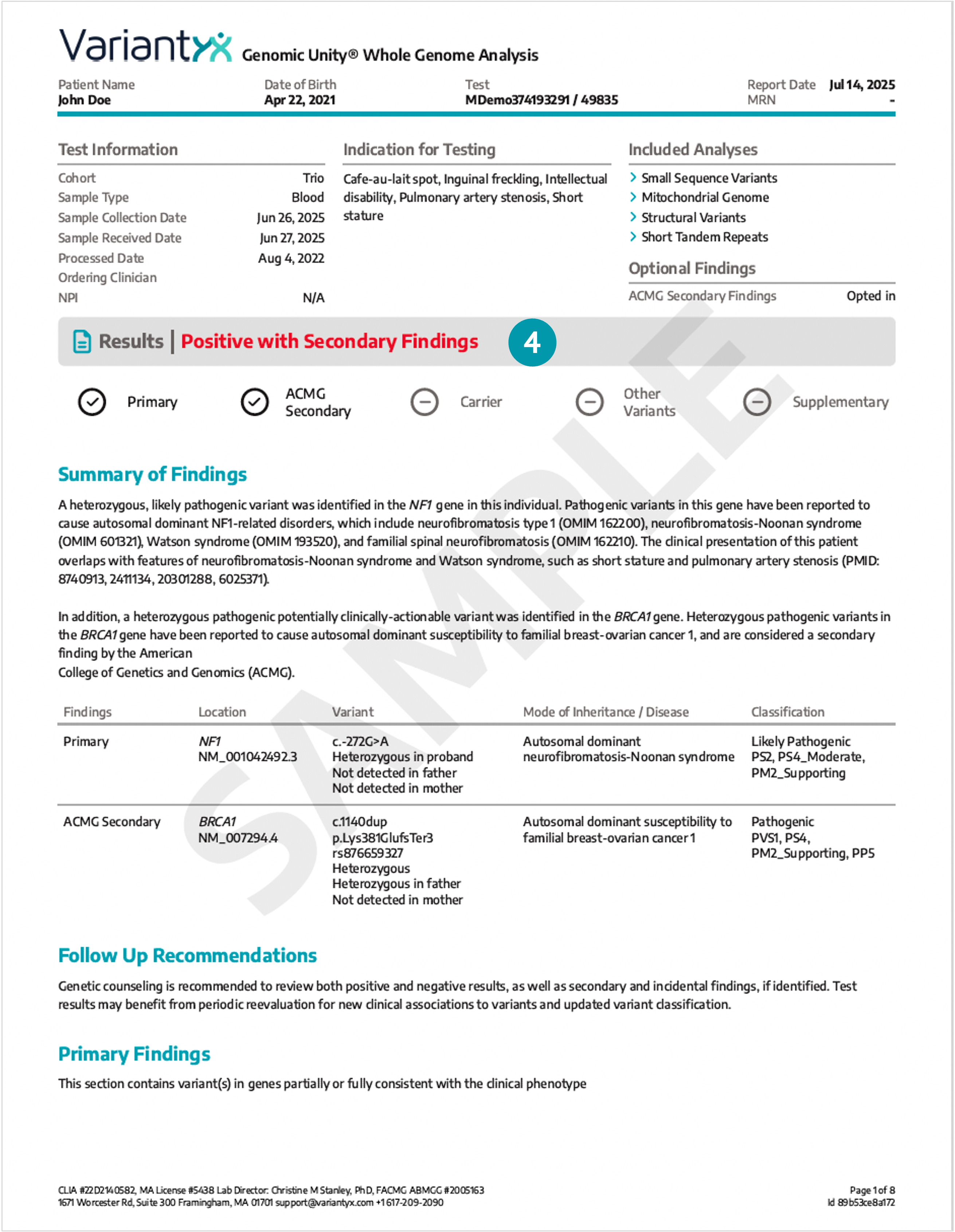
At-A-Glance Results
Provides the overall case determination. Possible results include positive, negative, uncertain, indeterminate and inconclusive. A positive result indicates one or more variants that explain or partially explain the clinical phenotype were identified by the test. A negative result indicates that no variants that explain the clinical phenotype were identified by the test. An uncertain result indicates one or more variants were identified by the test, but based on available information it’s not certain whether the variants explain the clinical phenotype. An indeterminate result indicates that a result could not be determined due to limitations or technical issues with the test that a repeat sample is unlikely to resolve. An inconclusive result indicates that there was an issue with the patient’s sample that the lab can not interpret. A repeat sample is recommended.
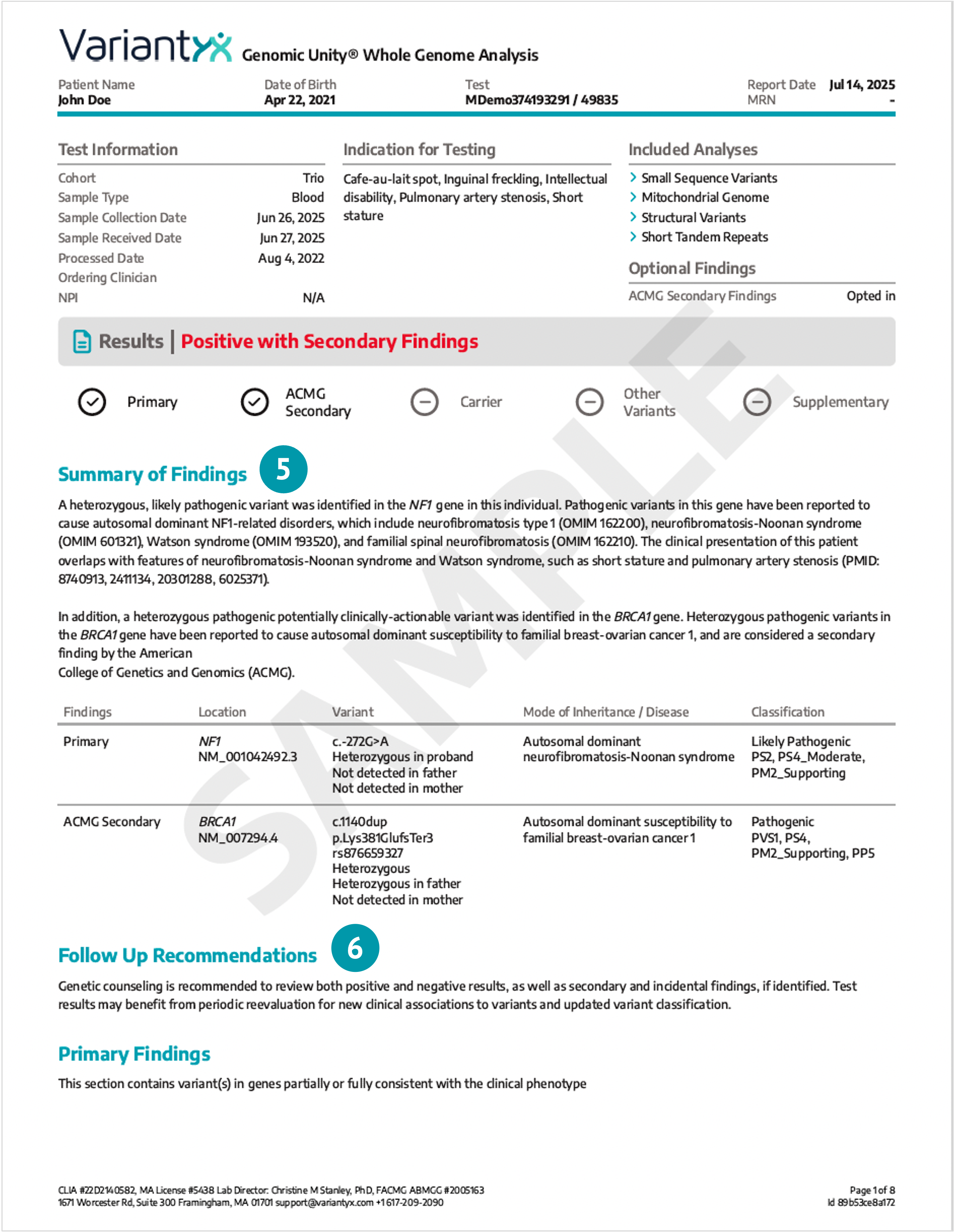
Summary of Findings
A personalized summary is followed by a table of reported variants that may include primary findings, ACMG secondary findings, actionable findings, other variant findings of interest or supplementary findings such as regions of homozygosity and previously reported variants that do not meet our reporting criteria.
Follow Up Recommendations
Follow up recommendations note recommended actions based on the test results.
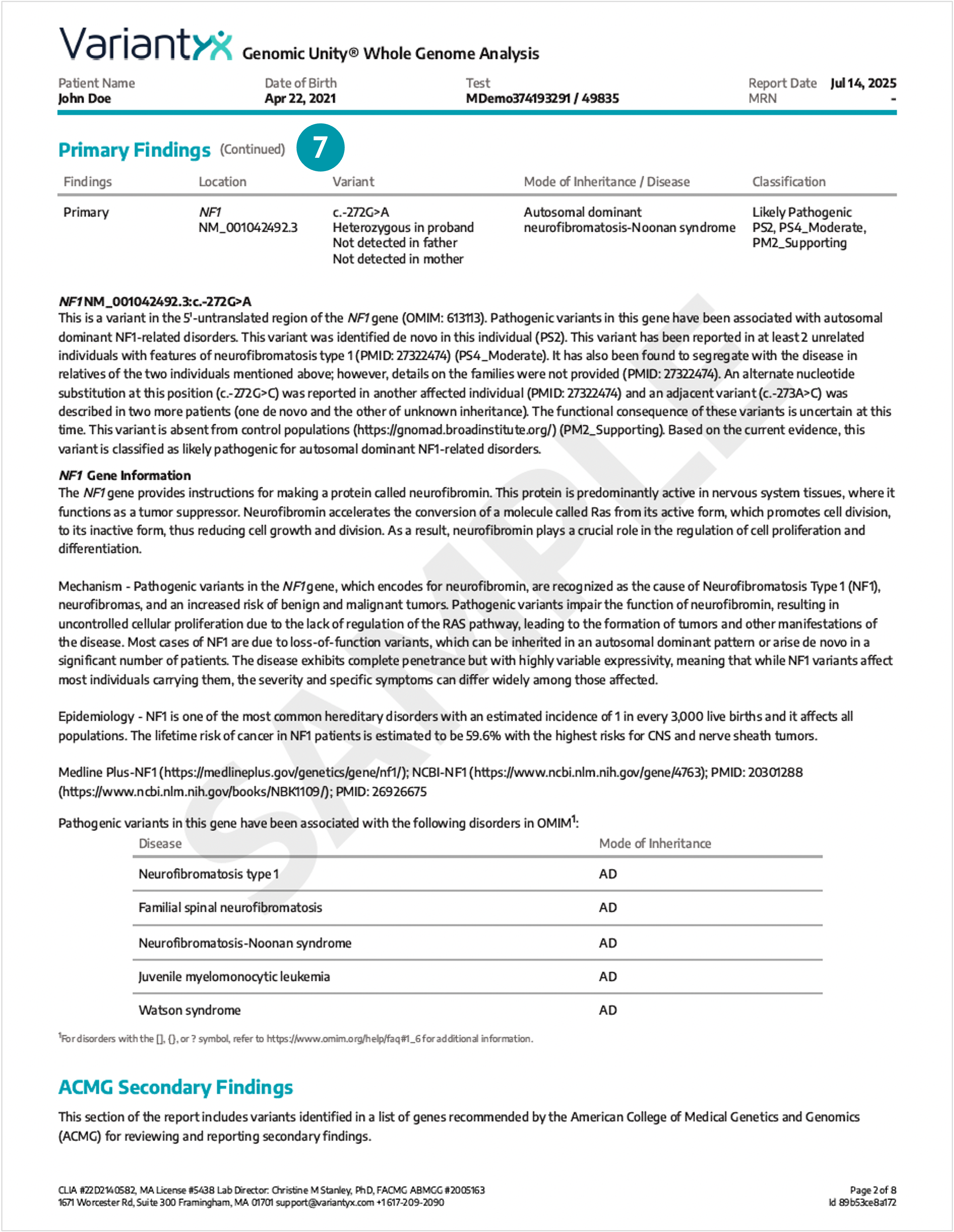
Primary Findings
Primary findings report pathogenic or likely pathogenic variants, or in some cases variants of uncertain significance, in genes that explain or partially explain the clinical phenotype.
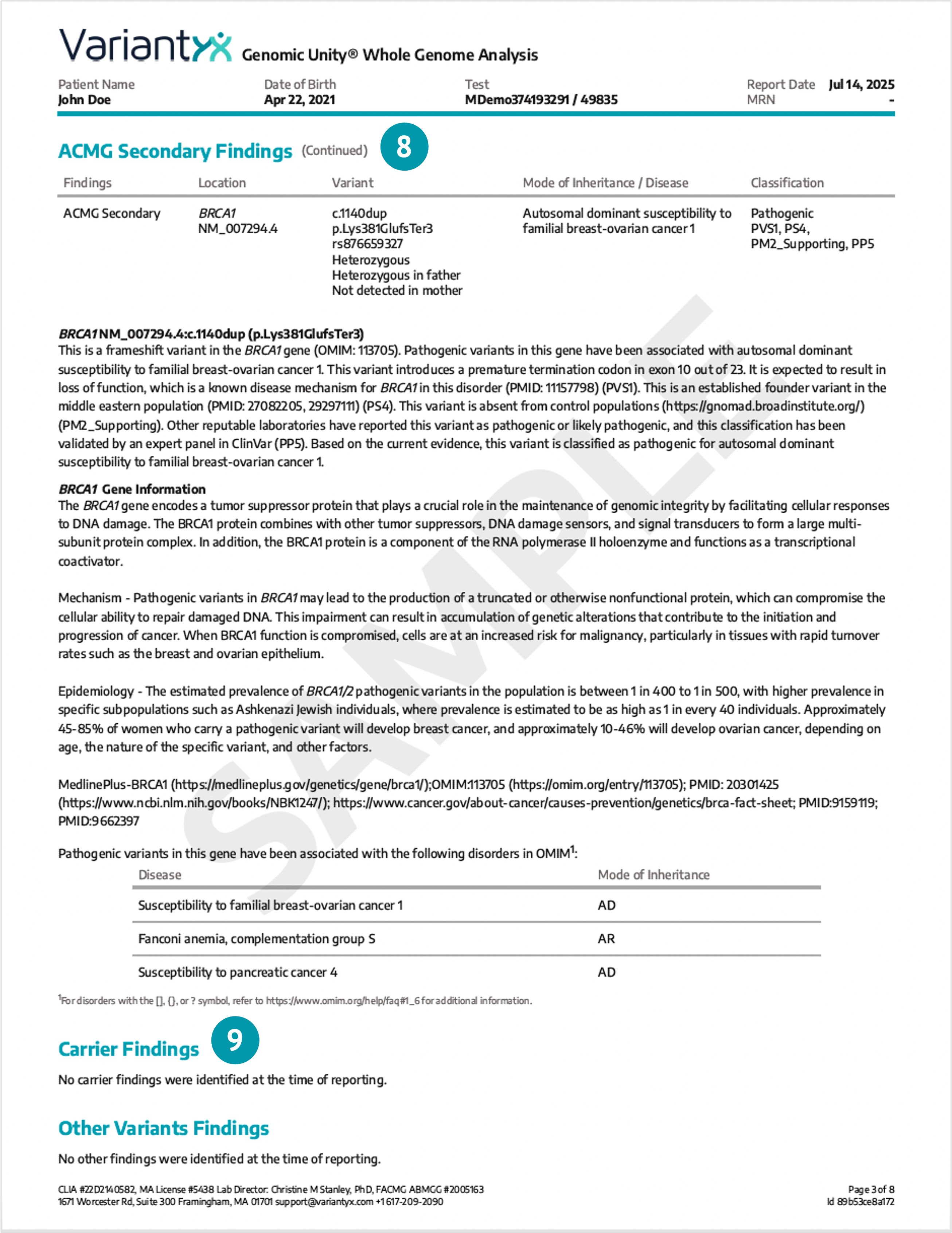
ACMG Secondary Findings
ACMG secondary findings report pathogenic or likely pathogenic variants in the most current list of ACMG recommended genes – a set of genes related to conditions with available actions that can be taken to mitigate onset or severity of the clinical outcome.
Carrier Findings
For comprehensive analyses, carrier status will be reported when a single pathogenic or likely pathogenic variant is identified for an autosomal recessive disease that strongly and specifically correlates with the patient’s phenotype. For targeted analyses, carrier status will be reported for all single pathogenic and likely pathogenic variants identified for an autosomal recessive disease in the gene(s) tested.
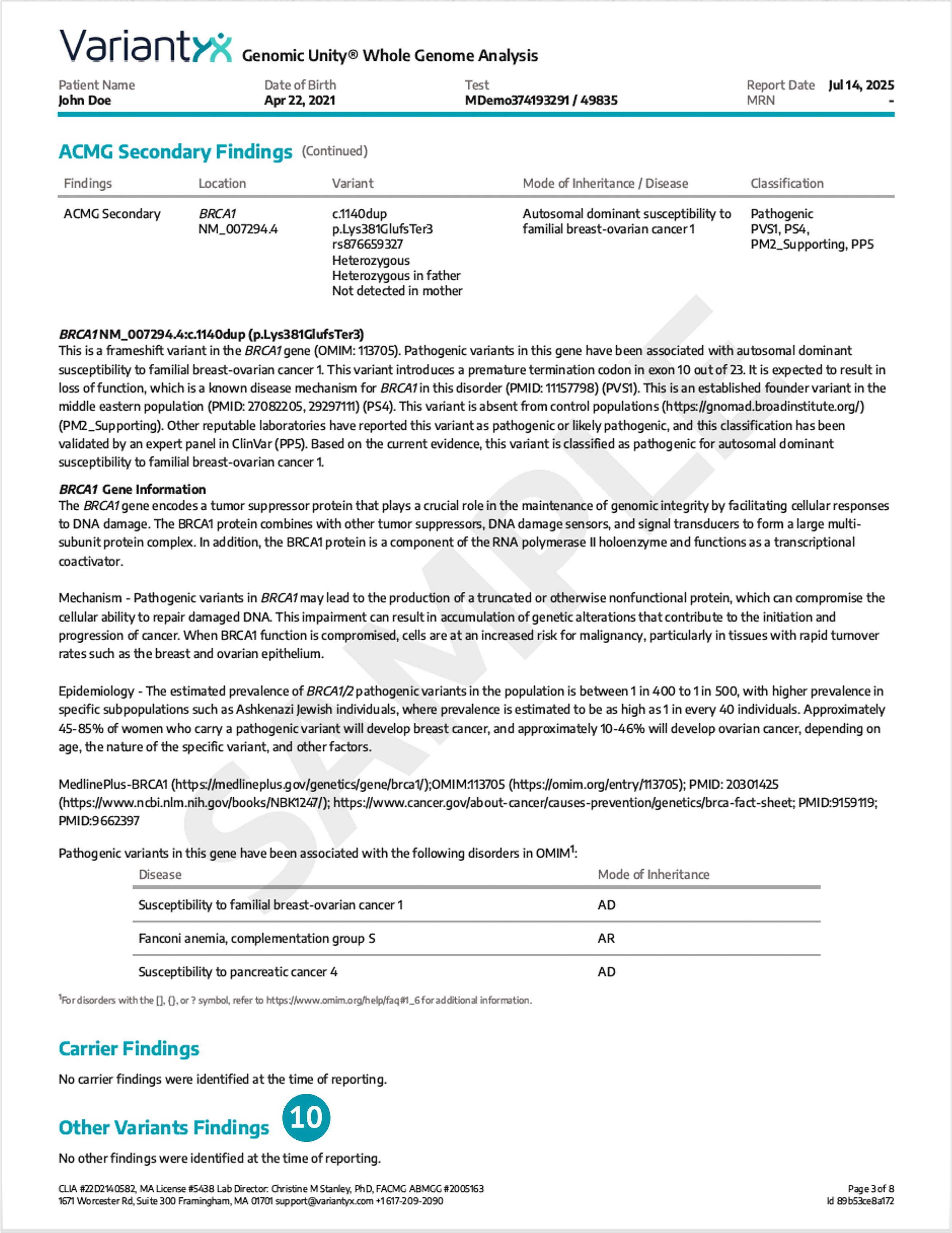
Other Variants Findings
May list variants not considered causative of the primary indication for testing based on the clinical information provided. Examples include variants in genes of uncertain significance (GUS), variants in genes with no or limited correlation to the patient’s phenotype and variants associated with the family history.
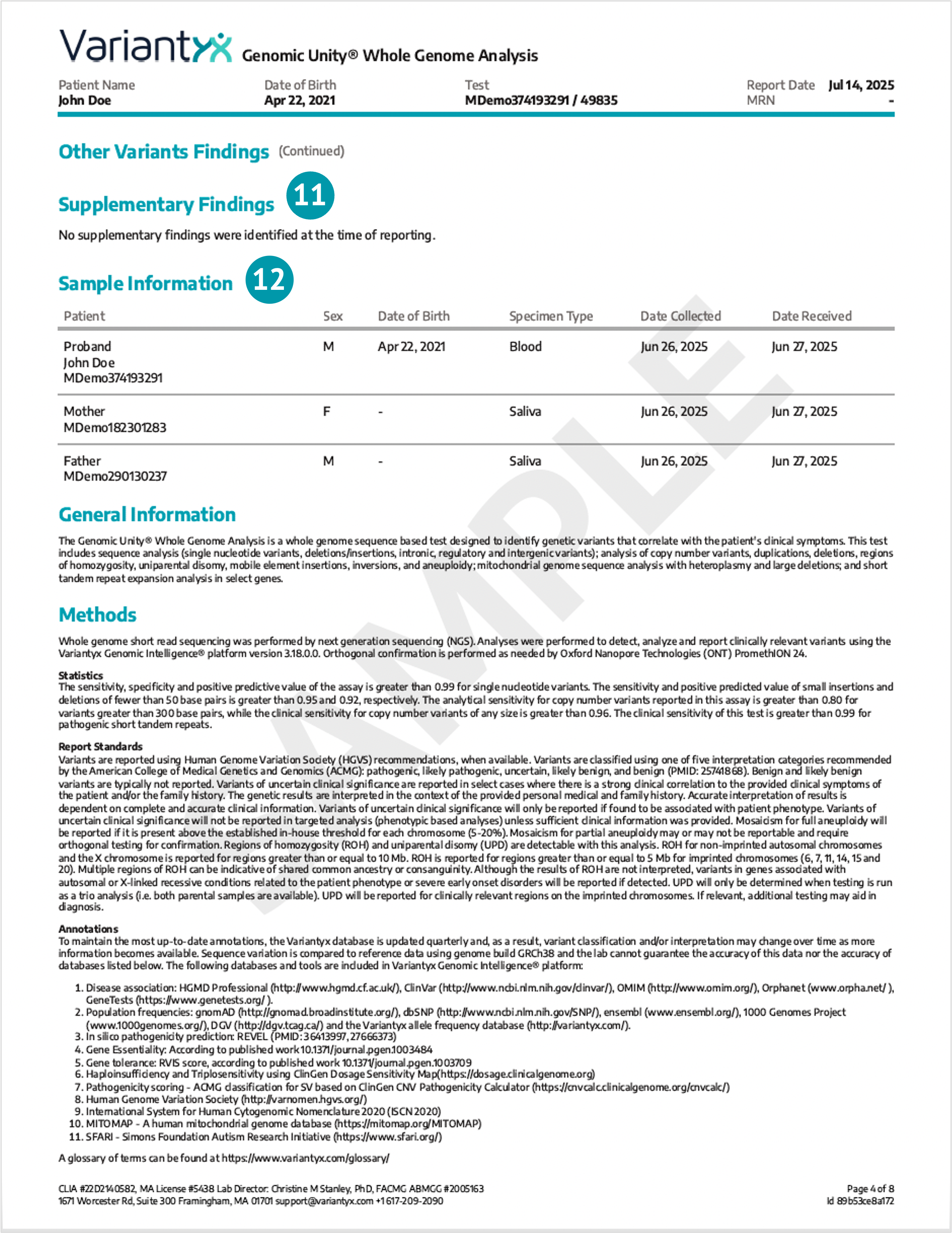
Supplementary Findings
May list variants reported by previous genetic testing, but that do not meet our clinical diagnostic reporting criteria. May also include regions of homozygosity (ROH), which may be indicative of uniparental disomy (UPD), ancestral homozygosity or regions inherited from a more recent common ancestor that are identical by descent (IBD). If the analysis includes sequence analysis, these regions will be interpreted for homozygous pathogenic or likely pathogenic variants and reported as indicated.
Sample Information
Records the sample information.
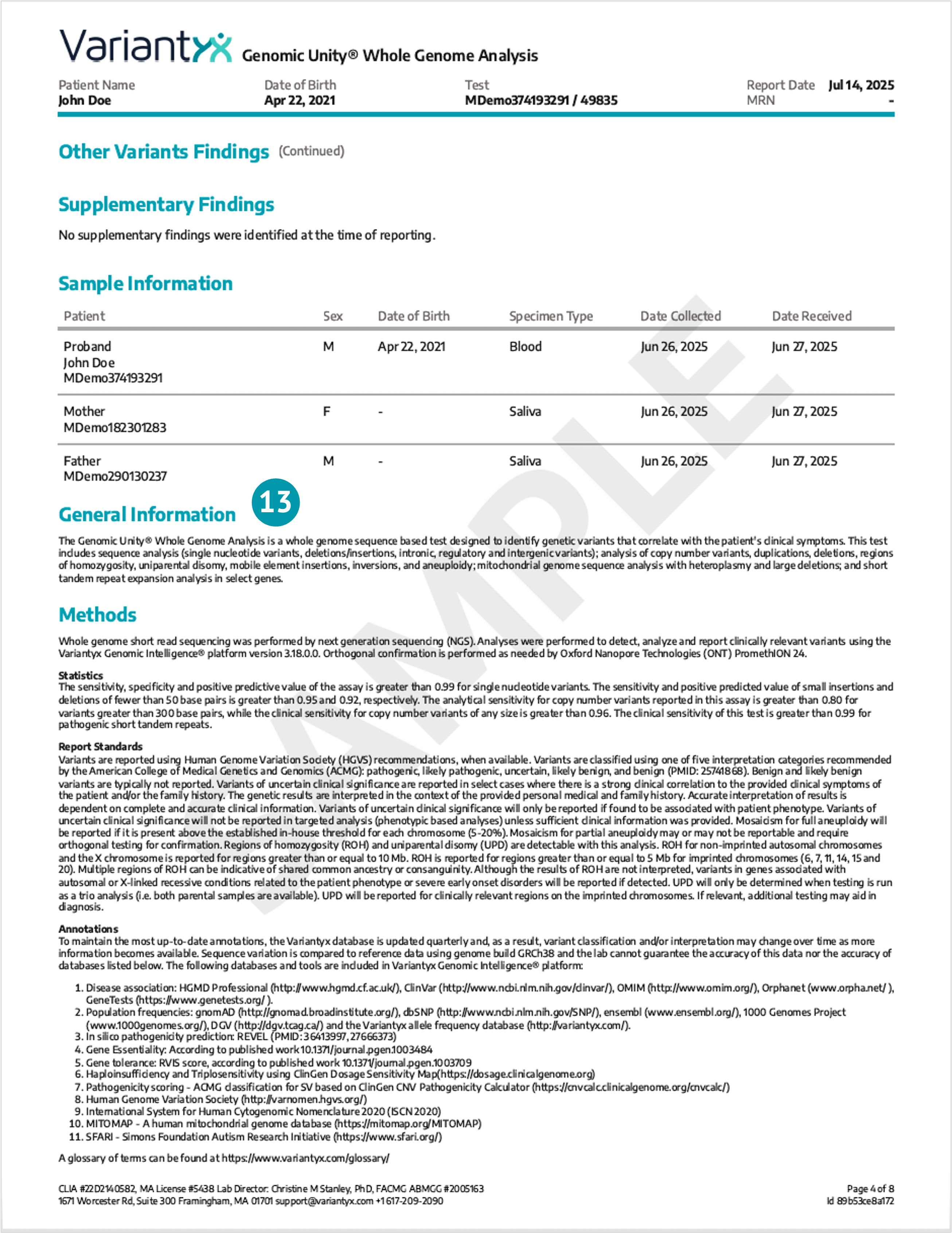
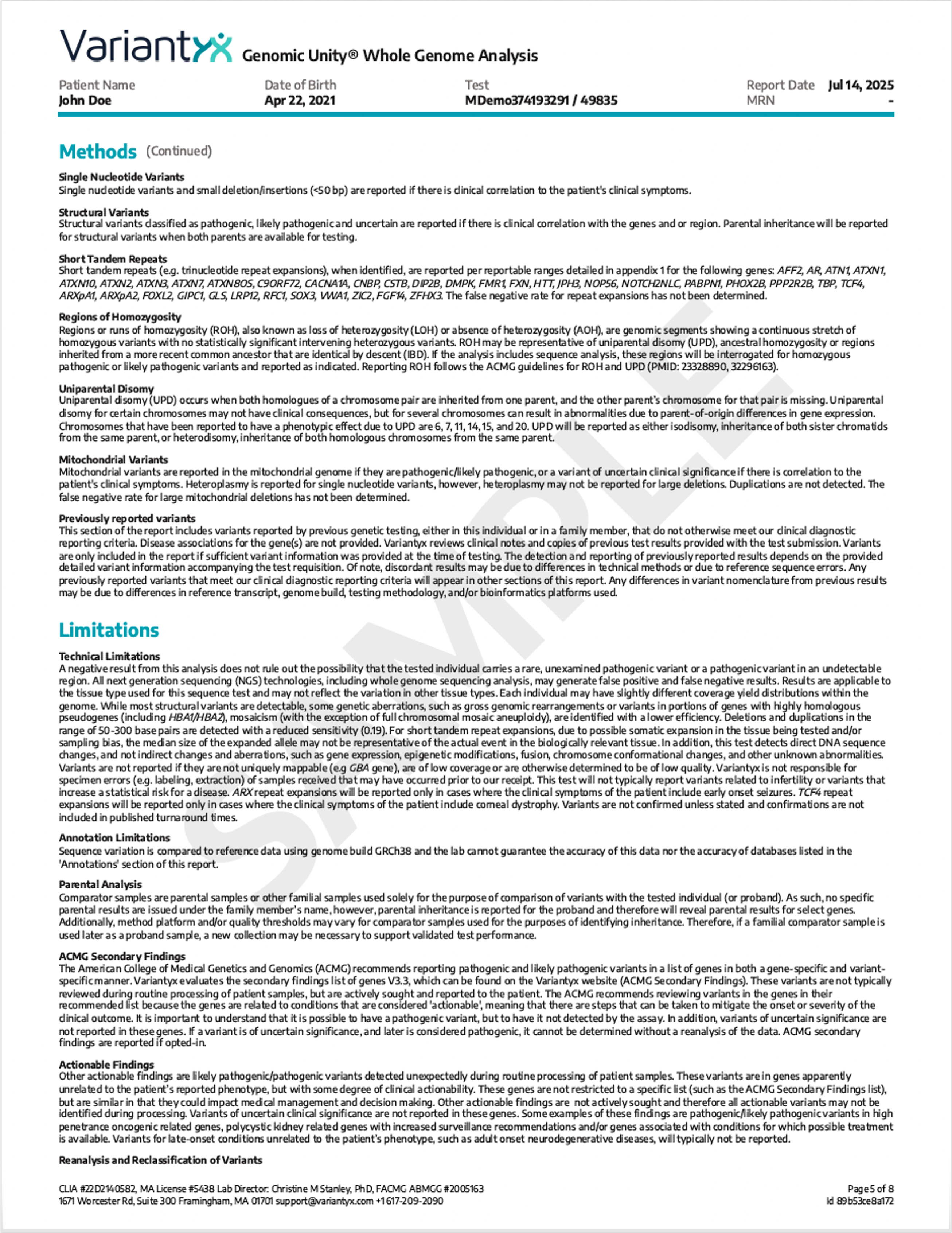
General Information, Methods and Limitations
Documents the test design, methods used and known limitations.
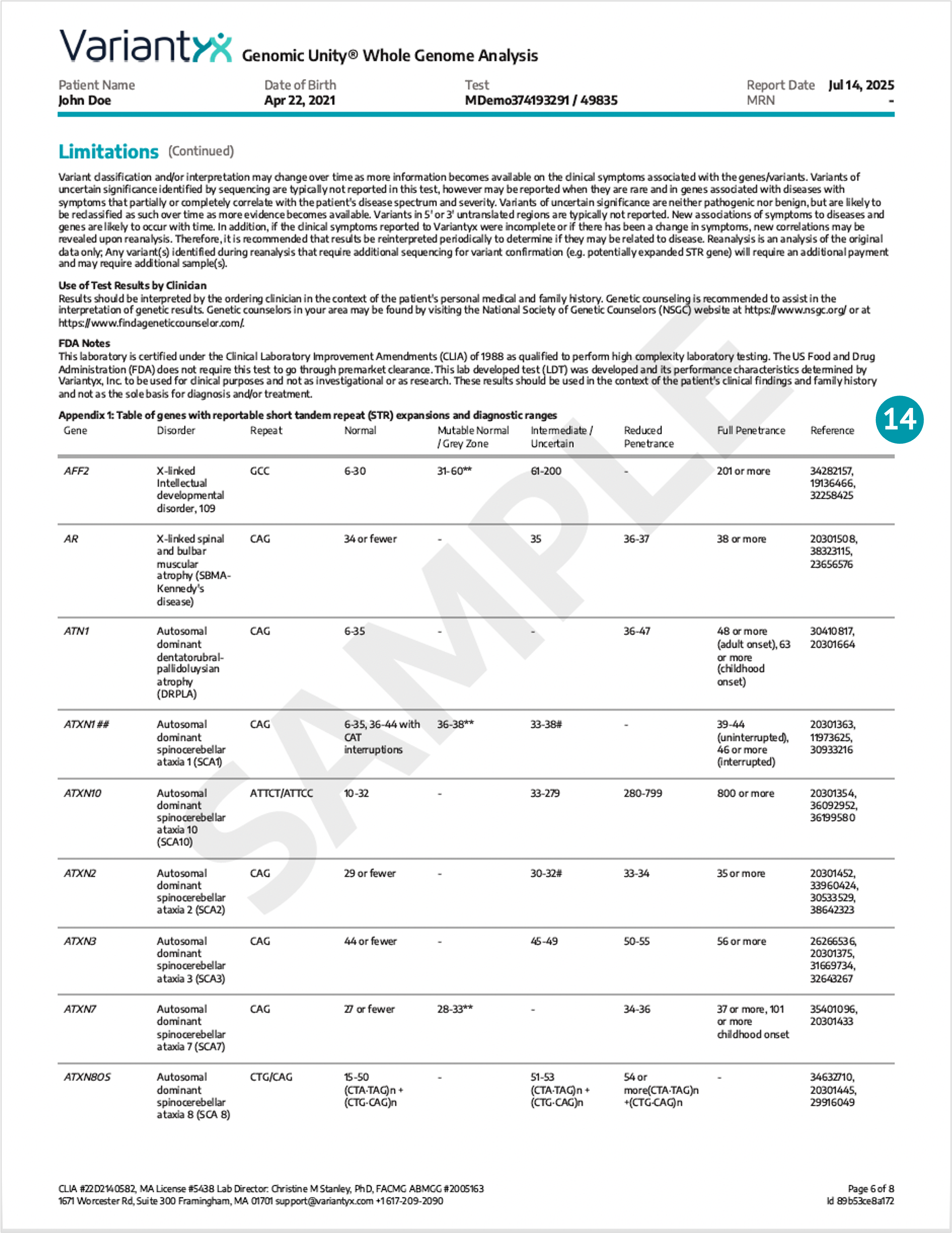
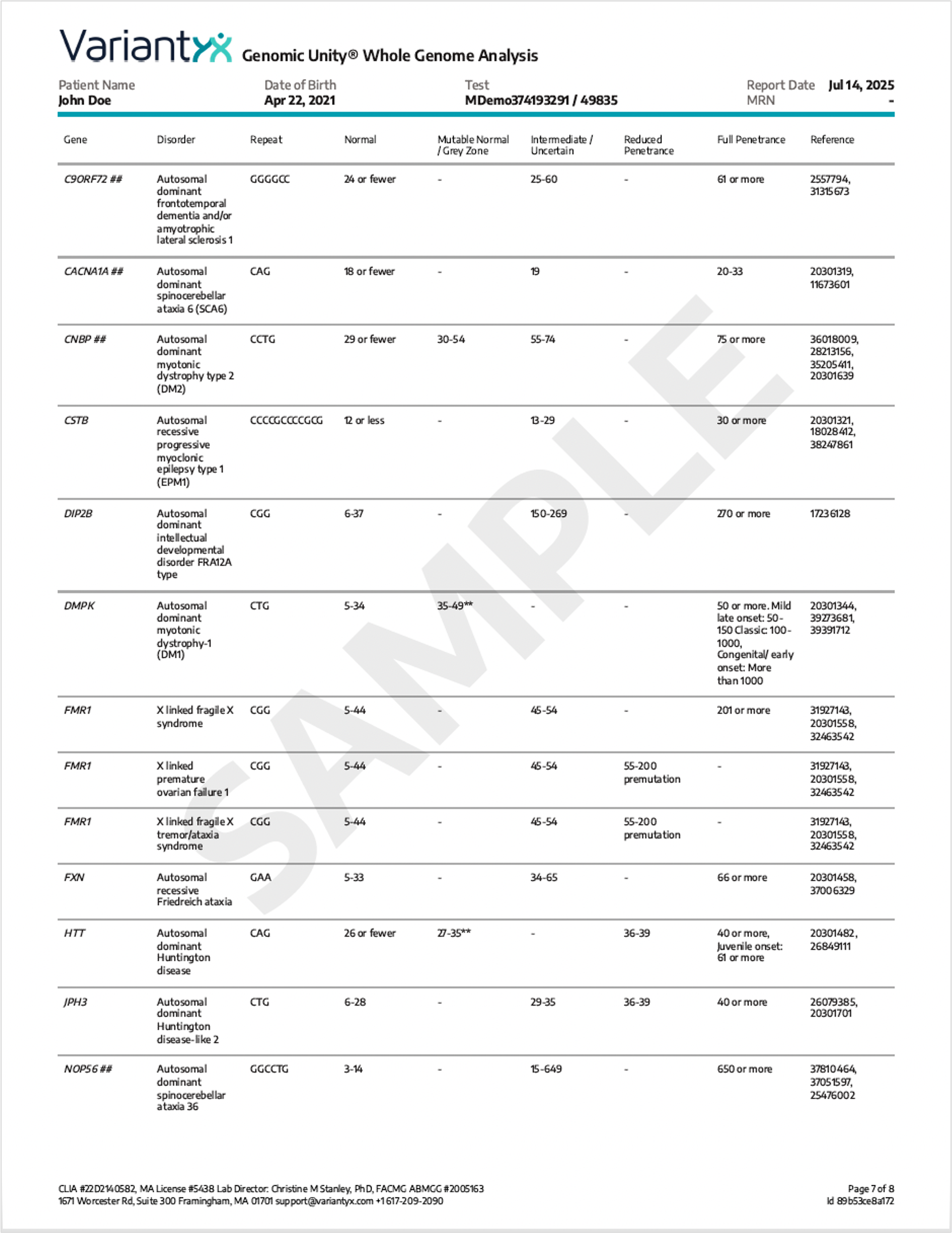
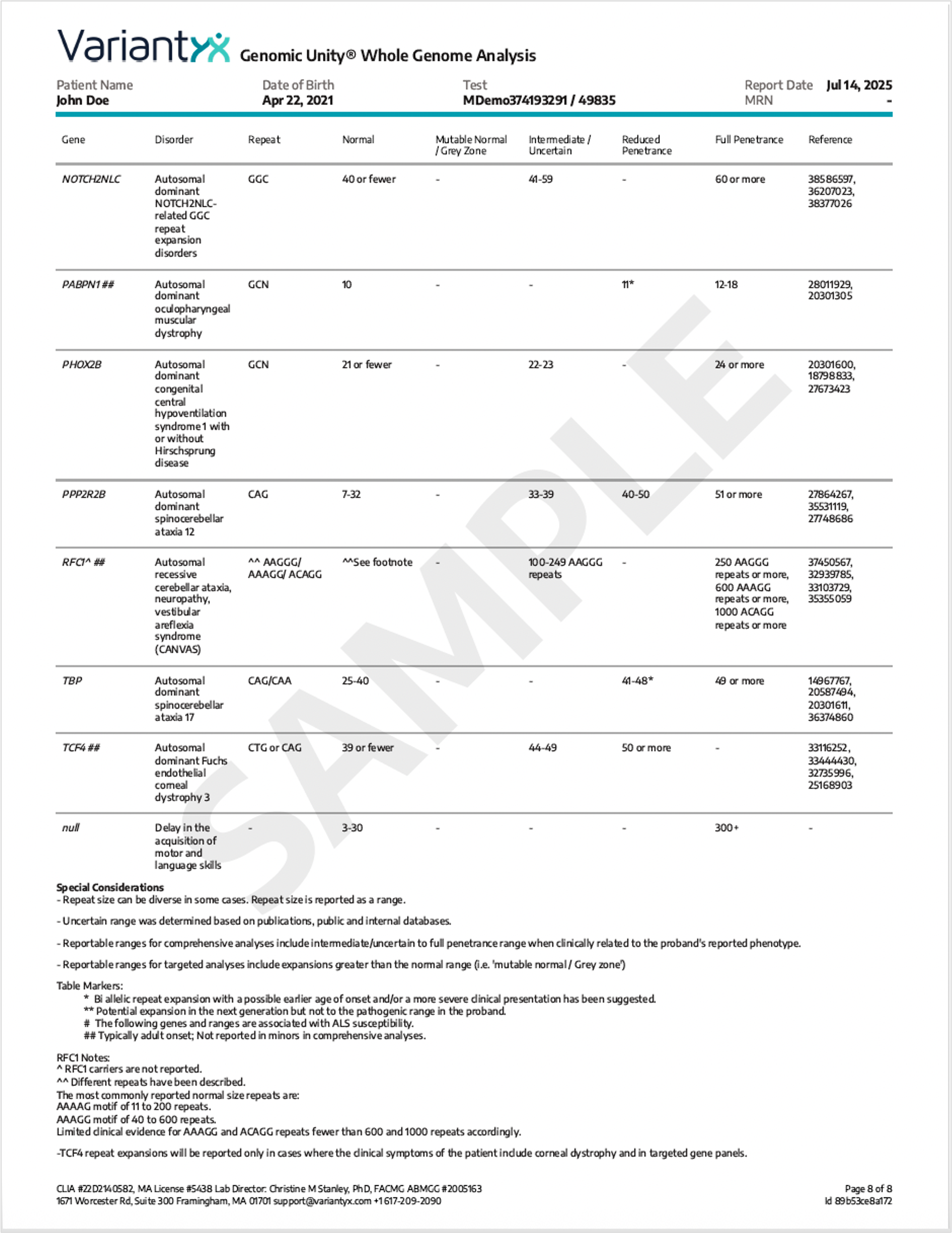
STR Genes Table
The limitations section includes a table of all genes with reportable short tandem repeat (STR) expansions analyzed in the test, and their diagnostic ranges. Reportable ranges for comprehensive analyses include intermediate/uncertain and above. Reportable ranges for targeted analyses include mutable normal/grey zone and above.
Refer to individual test information pages for specifics of which, in any, genes with STRs are analyzed by the test of interest.