
MISSED BY OTHERS, DETECTED BY US
Genomic Unity® Case Study
Clinical presentation
A 10-year-old male presented with the following symptoms:
- Peripheral neuropathy
- Lower limb muscle weakness
- Poor motor coordination
- Toe walking
- Ataxia
- Gait disturbance
- Abnormal eye movements
- Dysmetria
- Dysdiadochokinesis
Previous genetic testing
Multiple tests focused on the neuropathy symptoms were performed with negative results, including:
- PMP22 sequencing & del/dup
- Comprehensive neuropathies panel
- Whole exome sequencing

Genomic Unity® Testing
was ordered because of its ability to identify all major variant types in a single test.
Results and interpretation
Variantyx Genomic Unity® testing identified two pathogenic GAA expansions in the FXN gene.
Long-read sequencing confirmed the expansions, further characterizing the sizes as >450 and 850 repeats.
Diagnosis: Friedreich ataxia
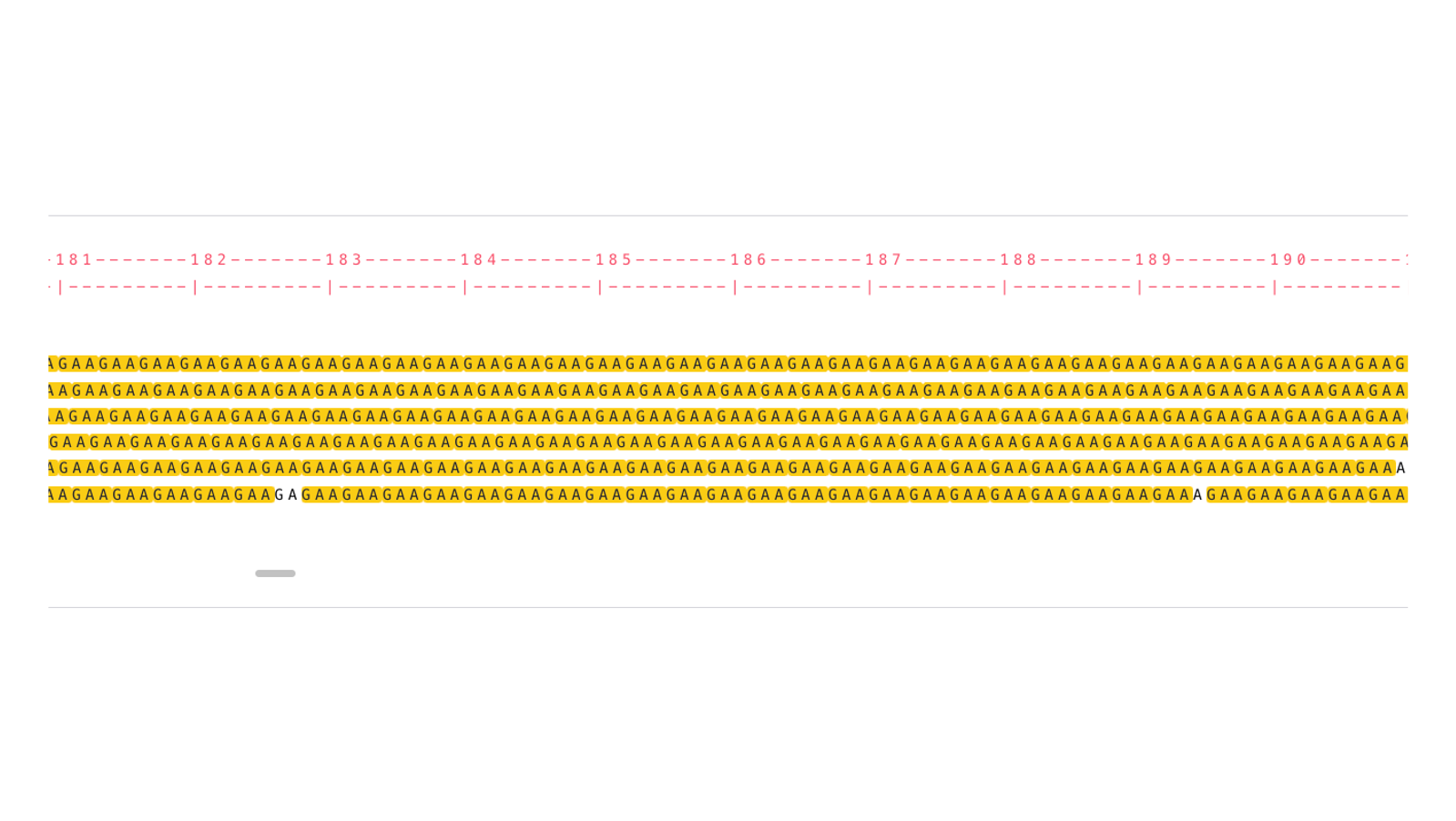
Uniform data from WGS clearly identifies the two FXN repeat expansions.
The Variantyx Difference
Why was Genomic Unity® testing able to identify the previously missed FXN expansion?
-
Repeat expansions can not be detected by standard genetic tests, including gene sequencing, panels and exomes.
Variantyx genome analysis detects all major variant types in a single test including small sequence changes, structural variants, repeat expansions and mitochondrial variants. -
Repeat expansions can be detected by PCR and Southern blotting, but FXN would have to be specifically targeted. This wasn’t a likely choice for testing given the focus on the peripheral neuropathy symptoms.
Variantyx genome analysis detects repeat expansions in >35 genes, including FXN. If Genomic Unity® had been ordered as first-line testing, the FXN expansions would have been identified immediately, allowing for earlier access to omaveloxolone treatment and the potential to slow progression of the patient’s ataxia symptoms.
Variantyx tests that would have identified this variant
Genomic Unity® 2.0 | Genomic Unity® Whole Genome Analysis | Genomic Unity® Lightning Genome Analysis | Genomic Unity® Exome Plus Analysis | Genomic Unity® Exome Analysis | Genomic Unity® Movement Disorders Analysis | Genomic Unity® Comprehensive Ataxia Analysis | Genomic Unity® Ataxia Repeat Expansion Analysis
Want similar results for your patients?
Connect with a Clinical Specialist to find out how easy it is to bring the power of whole genome sequencing into your practice.