Genomic Unity® 2.0 Case Study
Overview
Patient:
73-year-old male
Clinical presentation:
Progressive gait imbalance, peripheral neuropathy, dysphagia, ophthalmoplegia, ptosis, double vision, tremors, vertigo, tinnitis
Testing strategy:
Variantyx whole genome testing with combined short and long-read sequencing
Key finding:
BEAN1 repeat expansion
Clinical outcome:
Diagnosis established
Why Genomic Unity® 2.0 was the right choice
Despite multiple unremarkable MRIs of the cerebellum and no apparent family history of ataxia or other neurodegenerative disorder, the patient was concerned by his worsening mobility and sought answers about possible progression.
Genomic Unity® 2.0 was selected because it delivers the most comprehensive genomic insight from the start while:
- Reducing time to diagnosis
- Avoiding unnecessary testing
- Supporting the highest standard of patient care
Diagnostic finding: Spinocerebellar ataxia 31
Variantyx Genomic Unity® 2.0 identified a fully expanded, mosaic, BEAN1 allele with 85-120 TGGAA repeats.
A homozygous, pathogenic GAA variant and a heterozygous, pathogenic BRCA2 variant were also identified as ACMG secondary findings.
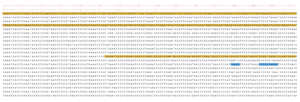
Uniform data from long-read WGS clearly identified the mosaic BEAN1 expansion. The GAA and BRCA2 variants are not shown.
Impact on clinical care
Established a definitive diagnosis, providing insight into possible progression.
Variant spotlight: Repeat expansions
Detection challenges:
Repeat expansions, the most common cause of hereditary ataxias, can not be detected by standard genetic tests, including panels and exomes. And even most genomes.
While repeat expansions can be detected by PCR and Southern blotting, BEAN1 would have to be specifically targeted. Very few available ataxia tests are able to overcome the challenges of this locus.
Why Genomic Unity® 2.0
- Sequences a patient’s genome twice: once with short-read genome sequencing and once with long-read genome sequencing.
- Detects all major variant types in a single test including small sequence changes, structural variants, mitochondrial variants, and repeat expansions – which is critical for first-line testing of ataxia patients.
- Extends repeat expansion analysis to 45 genes, including BEAN1. Variantyx is one of the first labs to offer BEAN1 testing.
Additional similar cases

Genomic Unity® – Biallelic RFC1 expansion confirms clinical CANVAS diagnosis
Genomic Unity® – Biallelic FGF14 expansions explain progressive gait imbalance
Genomic Unity® – Friedreich ataxia diagnosis enables access to treatment options