Genomic Unity® Lightning Case Study
Overview
Patient:
7-day-old newborn
Clinical presentation:
Hypoventilation, aganglionic colon
Testing strategy:
Variantyx rapid whole genome testing
Key finding:
Pathogenic expansion in the PHOX2B gene
Clinical outcome:
Diagnosis established
Why Genomic Unity® Lightning was the right choice
Born at 40 weeks gestation, the patient presented with respiratory distress initially attributed to transient newborn tachypnea before progression to apnea requiring ongoing respiratory support. Abdominal distension prompted X-rays showing large, dilated loops demonstrating absent ganglion cells on biopsy consistent with Hirschsprung disease.
Genomic Unity® Lightning was selected as the initial test because it delivers the most comprehensive genomic insight from the start while:
- Reducing time to diagnosis to days or less
- Avoiding unnecessary testing
- Supporting the highest standard of time-sensitive patient care
Diagnostic finding: Congenital central hypoventilation syndrome
Variantyx Genomic Unity® testing identified a pathogenic expansion in the PHOX2B gene.
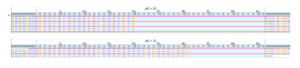
Uniform data from WGS clearly identifies a normal allele of 20 repeats (top) and an expanded allele of 31 repeats (bottom).
Impact on clinical care
Provided a timely diagnosis explaining the cause of ongoing respiratory and abdominal issues.
Variant spotlight: Repeat expansions
Detection challenges
Repeat expansions can not be detected by rapid exomes which can lead to missed diagnoses. Repeat expansion gene coverage in rapid genomes varies by provider.
Why Genomic Unity® Lightning
- Detects repeat expansions in up to 45 genes with Genomic Unity® Lightning 2.0 add-on.
- Detects additional variant types that may occur in trans.
Additional similar cases

Genomic Unity® – DIP2B repeat expansion explains developmental delay and symptoms of chronic functional disease
Genomic Unity® – Compound heterozygous FXN variants explain progressive gait disturbance
Genomic Unity® – Biallelic FGF14 expansions explain progressive gait imbalance